QTalo was founded by an ex-project manager who believed AI and automation could be harnessed to better support busy project managers. But, as an early-stage startup with limited runway, we couldn't afford to move in the wrong direction.
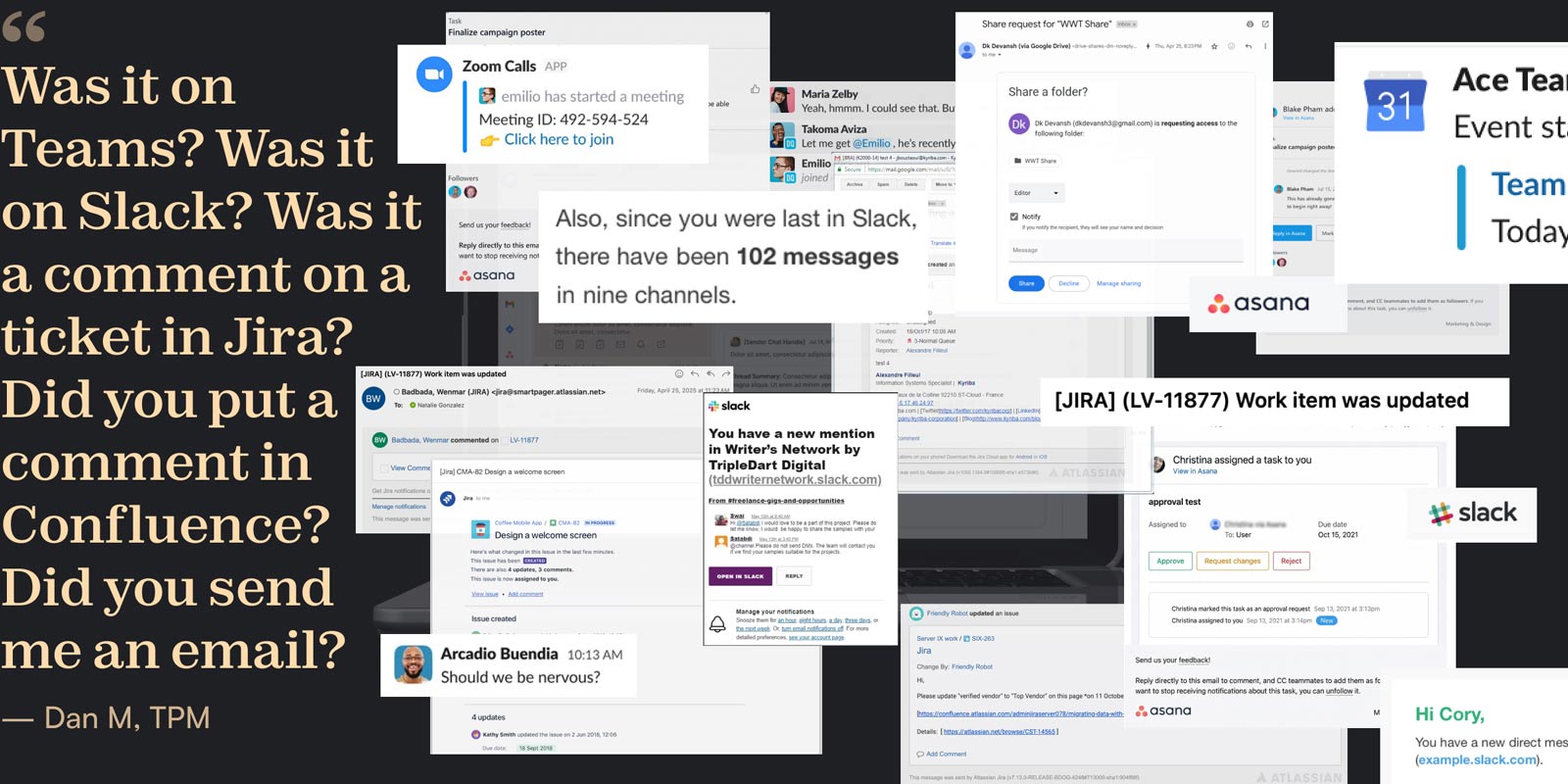
The Problem: Project managers in tech were spending up to 8 hours a week just managing communications – not leading, not thinking strategically, just triaging. The culprit was two interlocking forces: an explosion in message volume, and that volume scattered across an ever-growing stack of tools and channels. QTalo aimed to reduce the overwhelm and claw back lost time. We needed a solution that was both viable and desirable – fast.
Sneak Peek → The Outcome: As the principal product designer, I led the discovery and Design Sprint at QTalo that defined and validated a new product direction – and helped land QTalo's first paying customer before the product was even built.
My Role
Principal Product Designer
Position
Full-Time Employee
Post-Seed Startup
B2B & B2C SaaS, Communications Platform
AWARDS & PRESS
Landing our first paying-customer within a 5-day Design Sprint
The Foundation
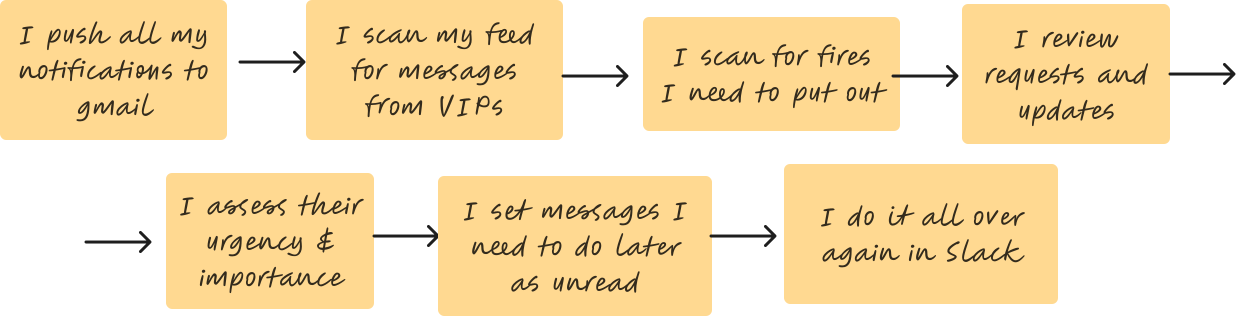
The sprint was built on months of prior discovery. Dozens of interviews and ethnographic research revealed that PMs had already invented a workaround: funnelling all notifications to email for a makeshift unified inbox. But it was leaky, focus-breaking, and still left Slack and Teams unmanaged.
A/B landing page tests run with Marketing confirmed strong demand for a unified solution.
Project managers' triage logic was strikingly consistent across industries, experience, and workload: VIPs first, fires next, priority requests, then updates.
Research had revealed a shared mental model that no tool was designed around. At least, not yet…
The Sprint
With evidence in hand, I secured buy-in to run a 5-day cross-functional Design Sprint — bringing together both founders, my PM and engineering counterparts, and the head of marketing.
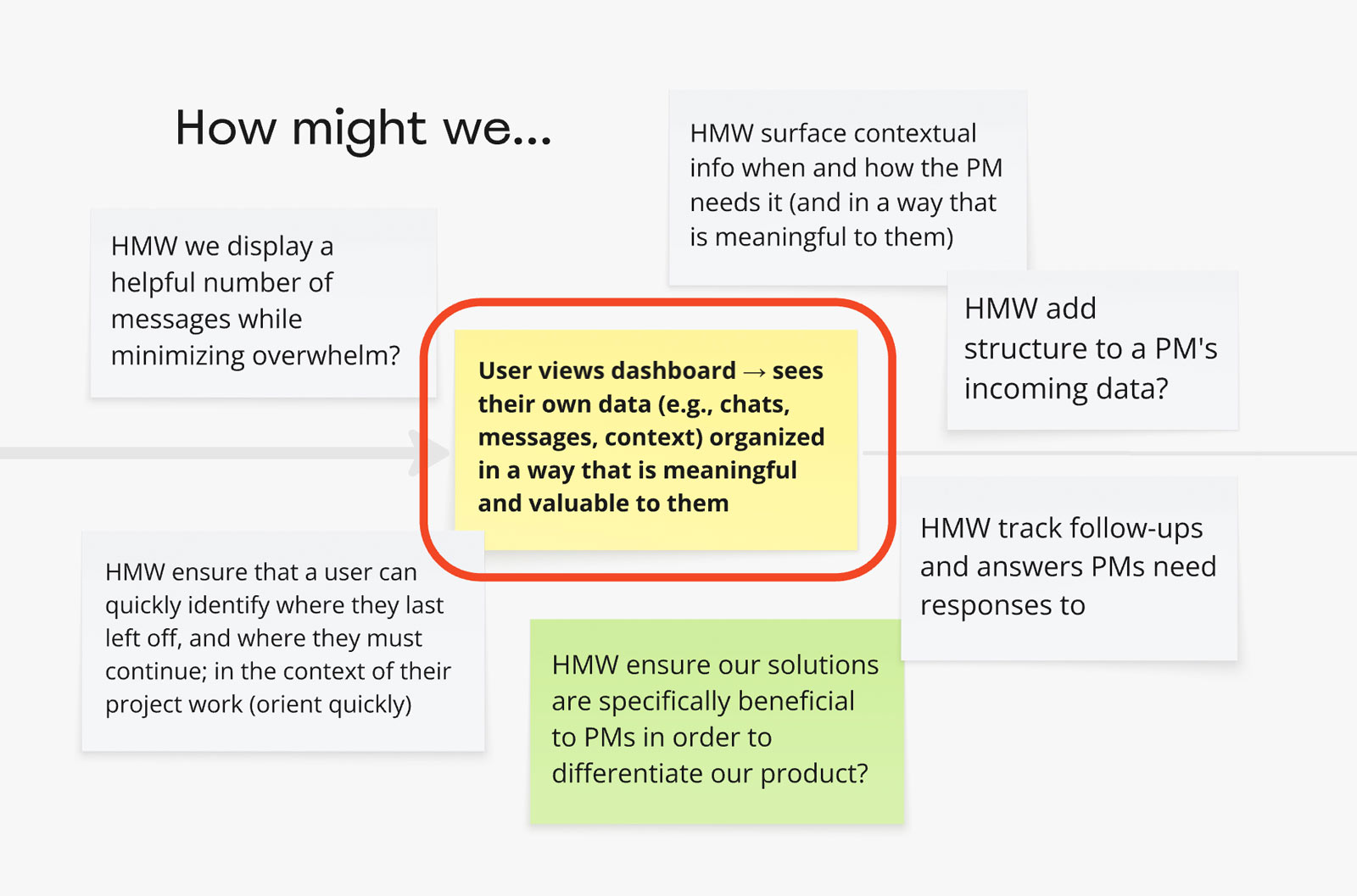
Through structured ideation exercises, the team converged on a critical insight: the solution needed to fully facilitate a project manager's triage process, not just unify disparate messages. That reframed the product from "another inbox" to a decision-making layer for project communication.
The Solution
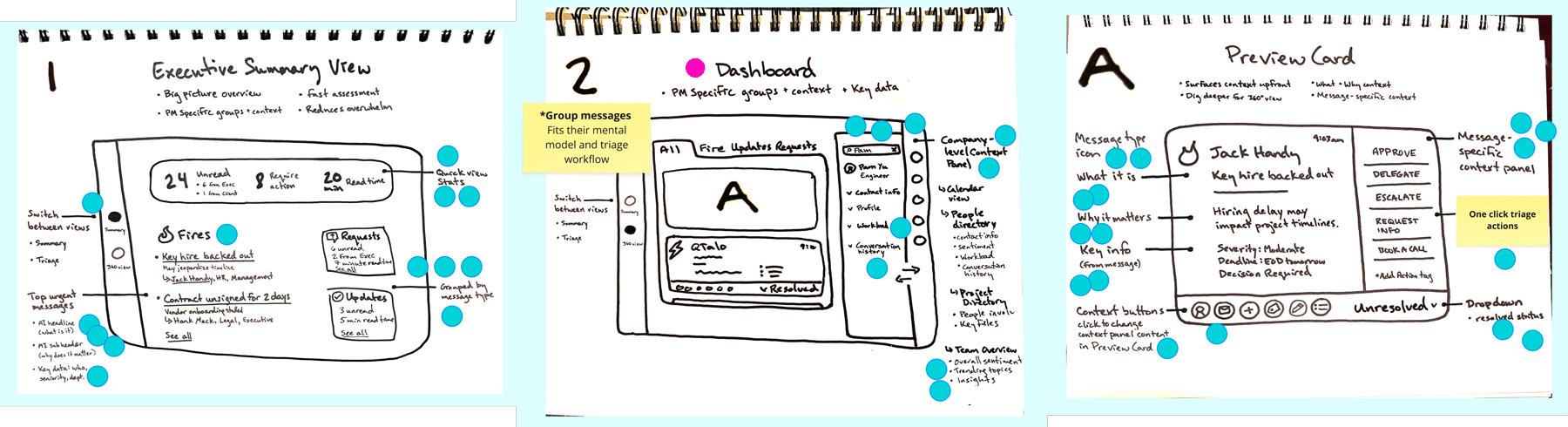
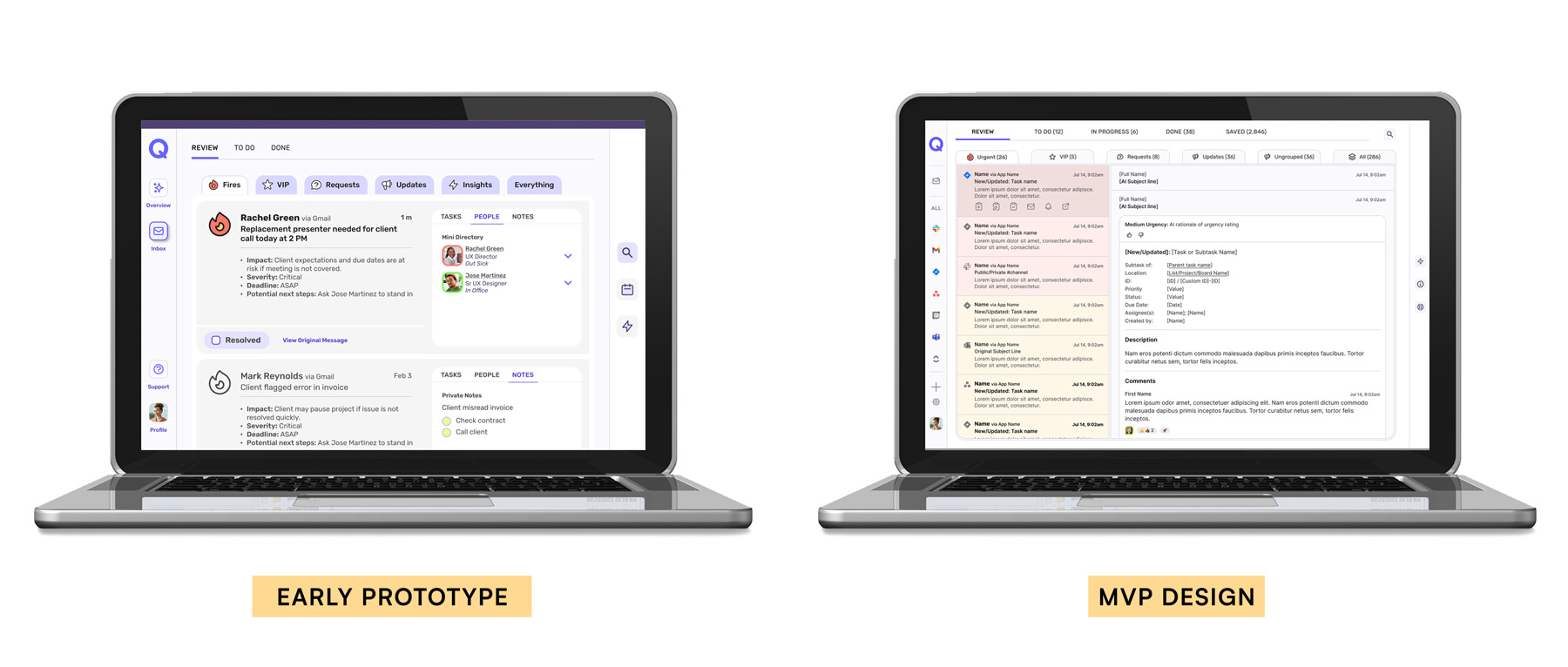
My AI-enhanced unified inbox concept was selected to move forward into prototyping and testing. It built on the team’s broader vision, bringing together prior insights and ideas into a structured approach that aligned with how project managers actually triage.
Features included:
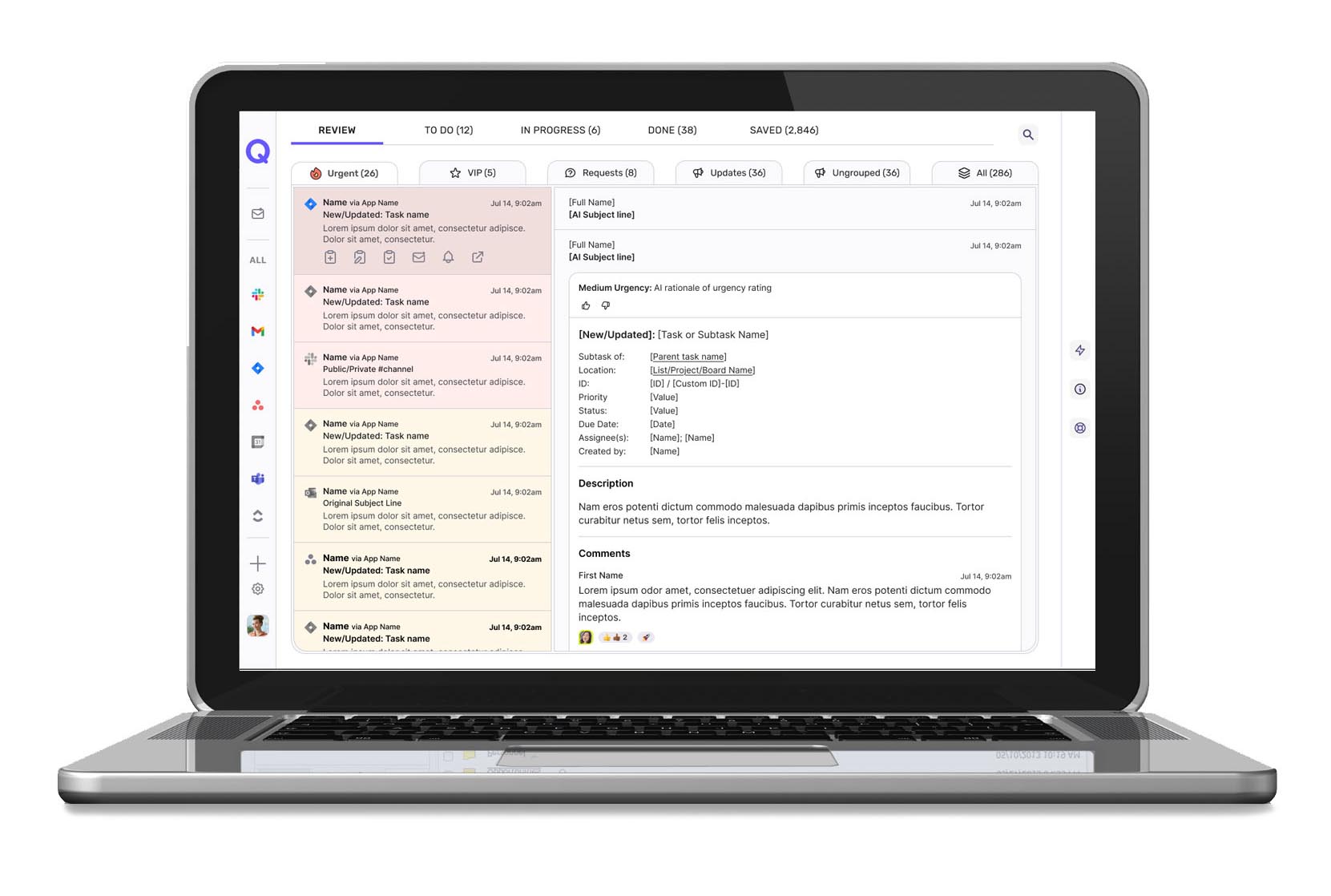
AI-powered prioritization to surface important messages and ‘fires’ using a rubric grounded in project managers’ mental models
Categorization and ordering of message groups to reflect real workflows (e.g., VIP → requests → updates)
Treating messages as trackable work items—moving them through defined states from Review to To Do and Done, rather than relying on “unread” or memory
Additional features included one-click triage actions, context-rich message views, and (a universally longed for) cross-platform search
Validation
I designed two Figma prototypes: the proposed QTalo experience and a replica of the email workaround project managers were currently using.
Five project managers from the tech industry completed moderated, task-based usability tests, in which each was asked to identify the "most critical" message as quickly as possible.
Users identified critical messages 3× faster with QTalo
Qualitative feedback consistently pointed to reduced overwhelm and clearer priorities
One participant created a paid account in anticipation of the upcoming product release, becoming QTalo’s first paying customer
After the Sprint
I translated the sprint outputs into the MVP product definition, and continued to refine the features and functionality through ongoing user interviews and iteration.
These efforts repositioned QTalo from an app design to deal with fragmented communication, to one that provides a focused, high-signal triage of what matters most to project managers.
The prototype roughly captured initial concepts that were then built into a polished design